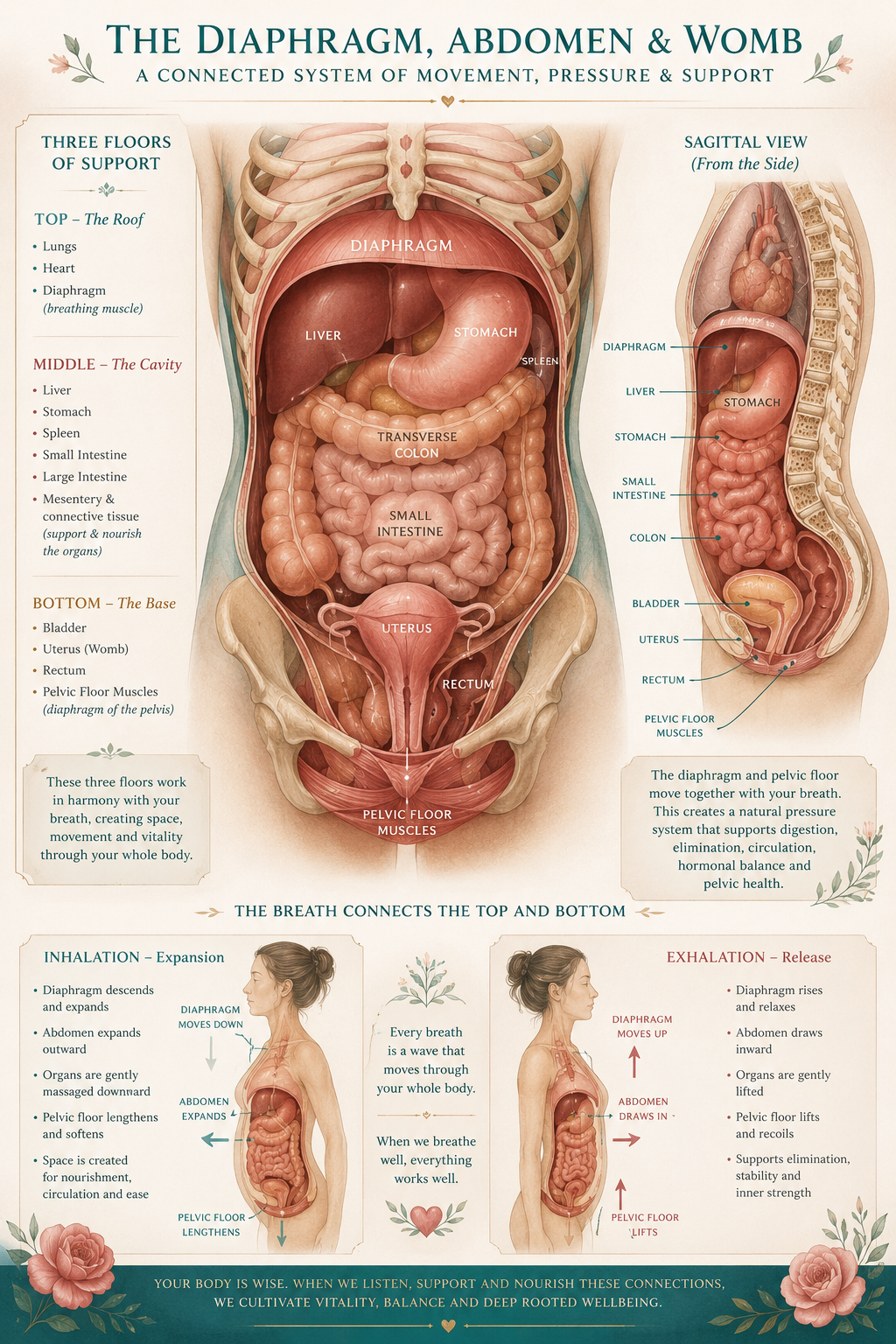
Understanding Uterine Position
"The uterus was never designed to be fixed. She was designed to move with every breath, every step and every season of a woman's life..."
One of the most fascinating aspects of women's anatomy is that the uterus is not a fixed organ.
She is designed to move.
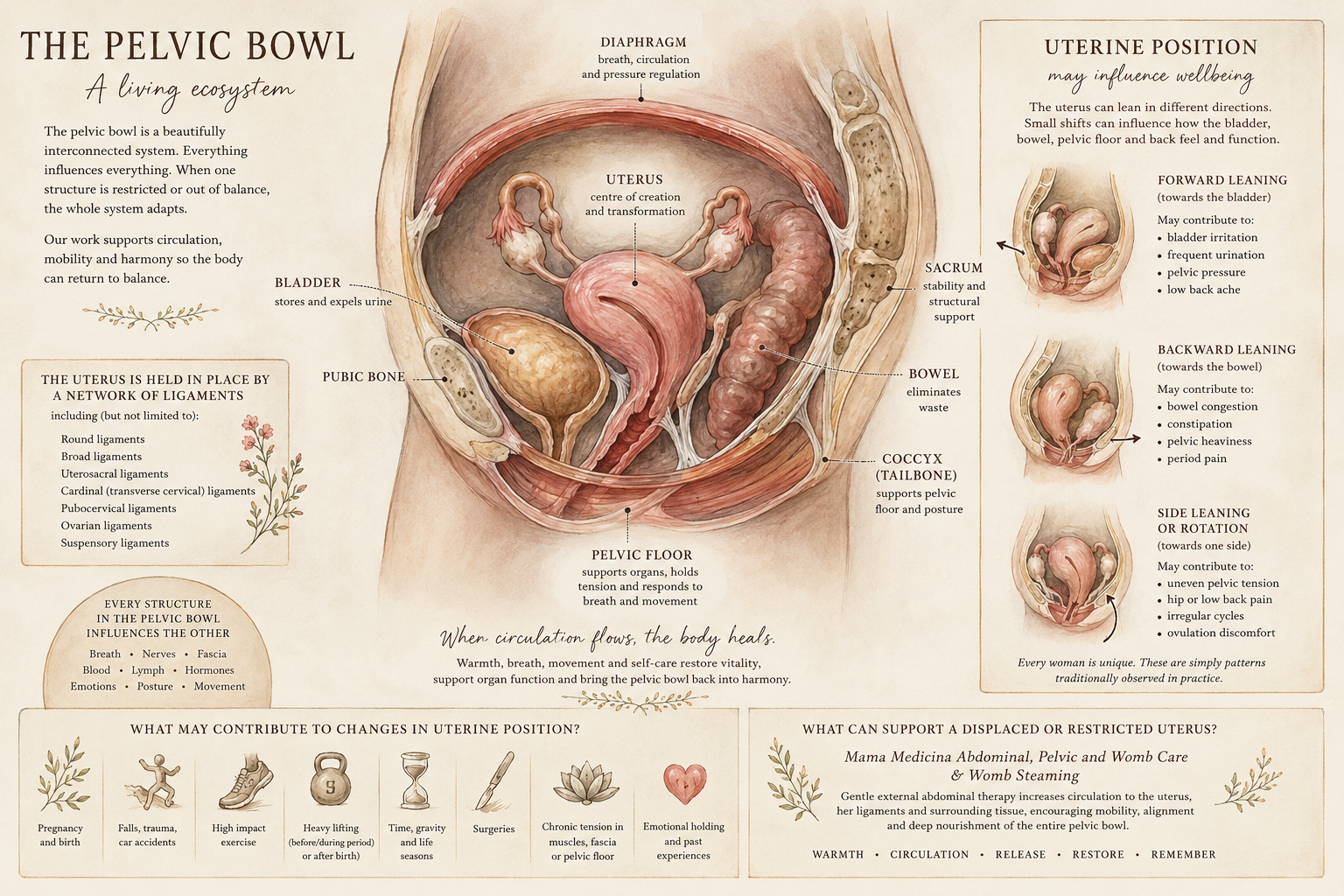
With every breath, every step, every full bladder and every bowel motion, the uterus responds to the rhythms of the body. She is suspended within the pelvis by a remarkable network of more than ten ligaments, along with fascia, muscles and connective tissue that work together to support her.
Over time, these supportive structures can become strained, weakened or restricted.
When this happens, the uterus may sit in a less-than-optimal position within the pelvic bowl. Traditional abdominal therapy teaches that this may influence circulation, lymphatic flow, nerve communication and the relationships between the womb, bladder, bowel and surrounding tissues.
Many women are surprised to discover how interconnected these structures are.
Signs a uterus may benefit from support
While every woman's experience is unique, a womb that has lost some of her natural mobility may be associated with:
Painful, heavy or irregular menstrual cycles
Painful or irregular ovulation
Dark or brown blood at the beginning or end of menstruation
Headaches or migraines around the menstrual cycle
Lower back pain, especially during menstruation
Pelvic heaviness or congestion
Bladder urgency, frequent urination or recurrent urinary discomfort
Constipation or bowel sluggishness
Pain during intimacy
Difficulty conceiving for some women
Increased discomfort during perimenopause or menopause
Feelings of tension or restriction through the pelvis
These symptoms can have many possible causes, and an assessment by an appropriate healthcare professional is always important. Traditional abdominal therapy is offered as a complementary approach to support pelvic wellbeing and is not a replacement for medical care.
What may contribute to changes in uterine position?
Many experiences throughout a woman's life may influence the mobility of the pelvic tissues, including:
Pregnancy and birth
Falls onto the sacrum or tailbone
Car accidents or physical trauma
High-impact exercise over many years
Repeated heavy lifting, particularly around menstruation or soon after birth
Pelvic or abdominal surgery
Time, gravity and the natural seasons of a woman's life
Chronic tension through the lower back, diaphragm or pelvic floor
Emotional holding patterns that become stored within the body over time
Every woman's story is different.
Rather than searching for one single cause, we gently listen to the whole landscape.
Supporting the Pelvic Bowl
Mama Medicina Abdominal, Pelvic and Womb Care combines gentle external abdominal therapy with traditional self-care practices and, where appropriate, ceremonial womb steaming.
The intention is to encourage healthy circulation, soften restriction through the tissues, support the natural mobility of the uterus, and restore greater harmony throughout the pelvic bowl.
This work is gentle.
It is respectful.
It honours the body's own wisdom.
And above all, it reminds us that healing often begins not with force, but with warmth, presence and relationship.